SKOCH Summit
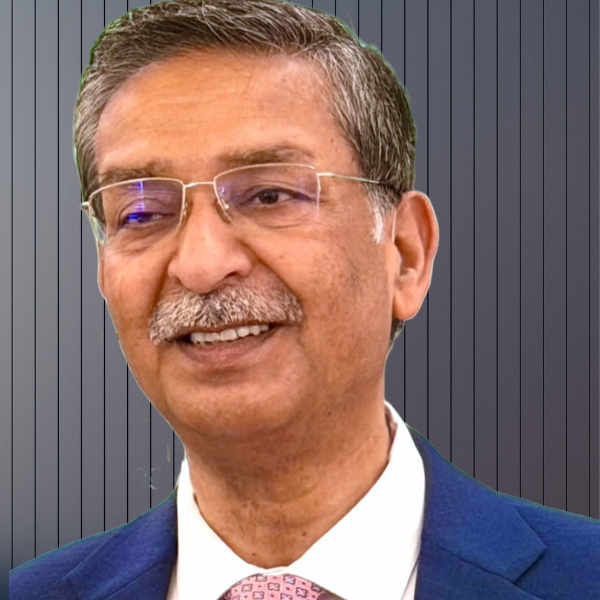
Mr Bharat Lal
Former Secretary General & CEO National Human Rights Commission
Mr. Bharat Lal joined civil service in July 1988 and recently completed his tenure as the Secretary General and CEO, National Human Rights Commission (NHRC), India. Before joining NHRC, he has worked as Director General, National Centre of Good Governance (NCGG), an apex-level autonomous institution of the Government of India in volved in public policy and good governance..
He holds Post Graduate degrees in Biochemistry and Forestry & Environment and has done research work at All India Institute of Medical Science, New Delhi. Prior to joining NCGG, he was working as Secretary to Lokpal of India, the anti-corruption body of the country.
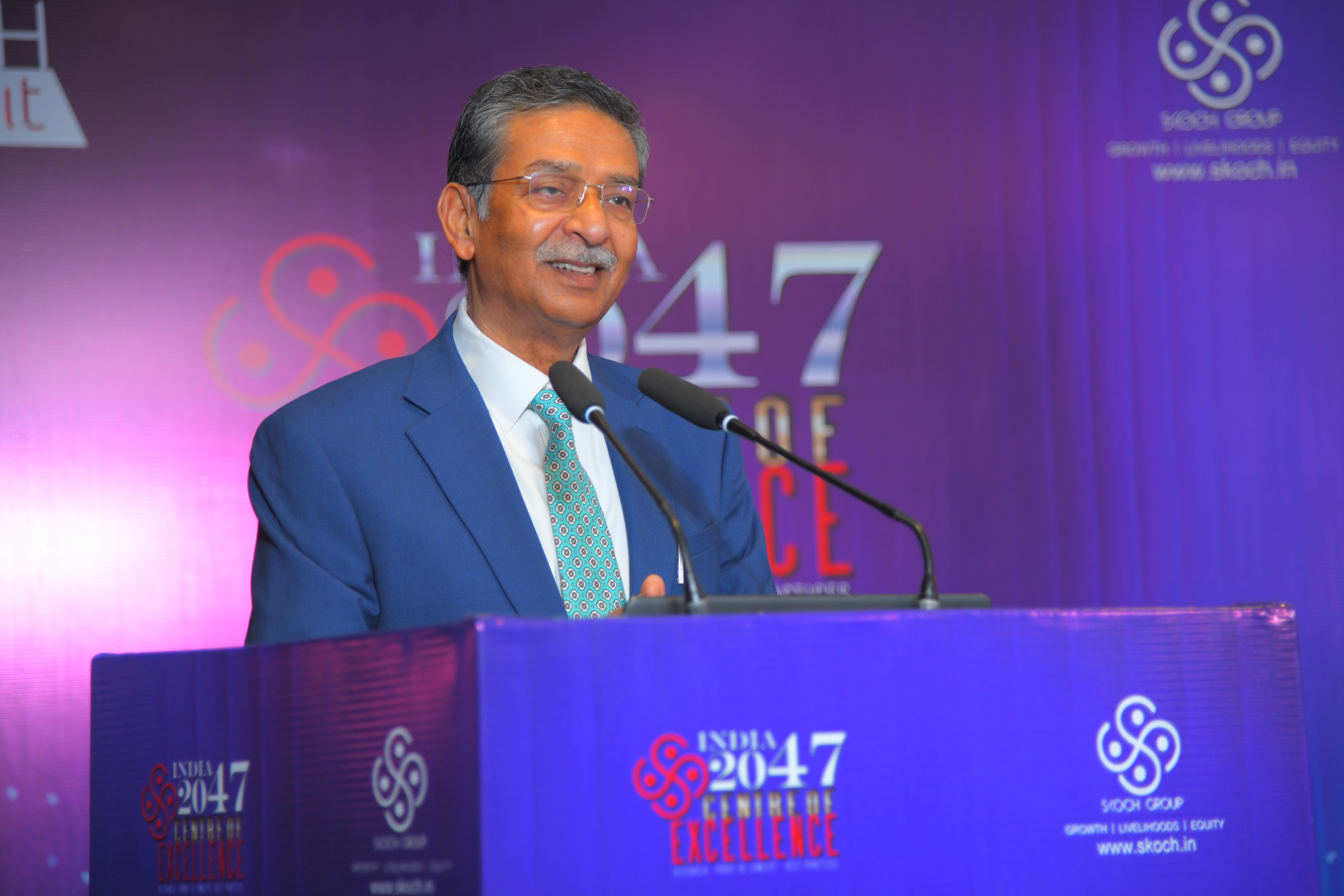
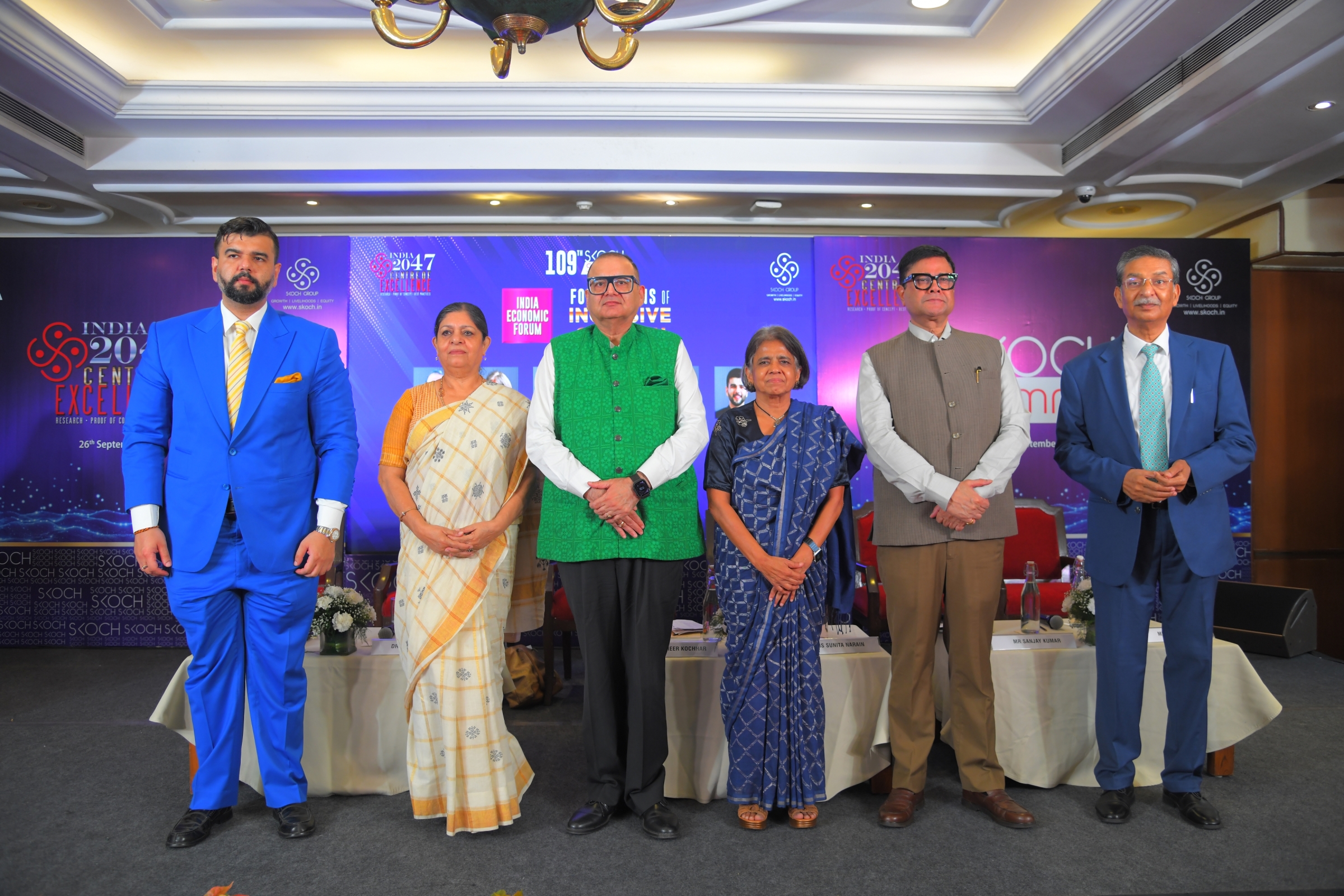
Mr Bharat Lal at the 109th SKOCH Summit: financing the foundations of Inclusive Growth
Mr Bharat Lal
Former Secretary General & CEO National Human Rights Commission
Key Points*
- The speaker honors Sunita Narain for her decades-long contribution to environmental research, public awareness and social impact.
- He highlights the importance of environment-related issues such as air, water, forests, wildlife, public health and pesticides.
- He praises the breadth and diversity of Sunita Narain’s work across multiple environmental and public health areas.
- He describes clarity, courage, conviction, integrity and knowledge-based advocacy as defining strengths of her public work.
- He argues that environmental and climate challenges have moved from a period of delay into a period of real consequences.
- He points to water scarcity, poor air quality and natural disasters as signs that environmental consequences are already being experienced.
- He stresses that citizens must also take responsibility for pollution, water bodies, sanitation and environmental protection instead of expecting government alone to solve every problem.
- He supports greater decentralisation and argues that citizens should both demand action from government and play an active role themselves.
- He says development, environment and equity should not be treated as separate goals.
- He calls for stronger action at village, association and community levels to improve environmental outcomes.
- He identifies community mobilisation as an important tool for social and environmental change.
- He encourages young people to work with communities and become more involved in community mobilisation.
- He highlights the role of CSE, Down To Earth and civil society institutions in maintaining strong values, ethics and public accountability.
- He argues that civil society, academic institutions and NGOs should act as conscience keepers of those who exercise public power.
- He calls for collective action involving government, citizens, local institutions, research bodies and academic institutions.
- He concludes that environmental work should be converted into visible action such as cleaner air, better sanitation and access to safe drinking water.
- He stresses that environmental failures often impose the greatest cost on the poorest sections of society.
* This content is AI generated. It is suggested to read the full transcript for any furthur clarity.
Transcript
Good morning everyone. Namaskar. Suridari, Samir, my esteemed colleague, Sanjay Kumarji, Samir Kocharji, Poonamji, Rohan and ladies and gentlemen. I think if not more than equally I am very happy actually. And when we honor a person like Sunidhaji, I think we honor a certain idea, a certain body of work and the way she touched many lives, many lives. I will give my example that long back when I was in Gujarat and we used to come in early 90s or mid 90s.
There used to be a Supreme Court case, Keshav's Supreme Court case. So one thing I will just simply remember that in the evening when we go home, my family was here in Delhi. And my daughter, my daughter-in-law, all of them. After some years, few years, my son quite often suffered because of air pollution, because of asthma, because of... But just imagine those days, early 80s, mid 80s or 90s. Then environment was not a very fashionable word. Environment, like forest, water, air, are very, very important.
Imagine somebody devoting her whole life, her whole life to this cause. And the kind of service she has done to society, to people of this country. I thank her because I am certainly very proud of, of course very envious, but very, very proud of. Second, if you see, most of the time, in fact, people like us, we get a lot of opportunities to work in different fields. But imagine she, in air or water or forest or wildlife or public health or pesticides. See the different dimensions of it.
This kind of diverse body of work is very, very important. And when I went to Gujarat in 1990, actually I joined my cadre. And thereafter I started reading, coming to work. And within, I think, two years, three years, there used to be a girl, actually, her name was Ranjum Jain, in CSE. And she came to Junagadh, to Gujarat, to write a story on Ayurvedic land. And I learnt a lot, actually, about what CSE is doing.
Because those days internet was not there. And then, imagine, I started following. I think she joined CSE in 1983, I believe. And I started following her work. And within no time I landed here in Ministry of Urban Development in Water Sector in 1997-98. And that time I saw such beautiful work, nine years' time, beautiful work.
Because today also, whenever I meet in this place, whether I go to management school or academy, I always tell that you must read this book. Because any society, if you get detached from your civilizational or cultural thoughts, or this powerful knowledge, I think that you become very artificial and your progress can be very fast. One thing I always like about you is that you, I don't want to embarrass her.
But, but, but, I didn't like that day, as Poonamji said, that clarity. Of course, courage, it's a very remarkable thing. After four decades of public service, somebody has the same reputation, that integrity. Everybody knows that she is not going to compromise on a certain line of business. You may like her, you don't like her. She always, in bureaucracy, in government, we all know that.
It means she has a strong conviction. So this combination of clarity, courage and conviction, and knowledge-based advocacy, I think that is what Poonamji is going to speak very, very, and that's why she turned to us, and of course, we have to show her that kind of respect. In fact, when SKOCH honors, in fact, SKOCH is honoring itself, as well as society.
Sir, thank you very much for having me here. I got a call, and I got instruction from my boss. The lady, she told me that you have to be there on this thing, on Saturday. And they came to know that I am going to be there. So they said, no, you have to speak also. I said, okay, fine, I agree.
But friends, what she has been talking about for decades, I will not take much of your time. I'll just quote just one small quote actually. He gave this speech in 1939, in the context of Hitler. I mean, he had started, you know, his campaign to capture Europe, and there was some kind of... his quote actually is so relevant today.
In the field of, let's say, media, our water, our environment, or any field, what he has been talking. And here I quote Winston Churchill, in 1939, he said this sentence in a different context. But just try to see what is happening with us vis-a-vis environment or nature.
I am quoting Winston Churchill. He said, "The era of procrastination, of half-measures, of soothing and baffling expedients, of delays, is coming to a close." In its place we are entering a period of consequences.
And I think in environment, climate, nothing can be more apt. We are truly, truly, I have been associated with these things for the last almost 38 years. And I am saying that, you know, there is water scarcity, or quality of air, or, let's say, various natural disasters, cyclone. I think we have already entered that period.
In many years, a person who devoted her whole life to awaken society, I think, to honour her and bestow this honour upon her, whatever she has been talking, advocating, researching, writing day in and day out, let's start following through things at our level. At our level.
Whenever it comes to polluting rivers, polluting water bodies, encroaching water bodies, you know, or let's say sanitation, it's not the government which comes specifically. It means that we have to take some responsibility. I think for everything, saying that it is only the government, this is the mindset that we have to change.
And I will also appeal to the Government also, and I think that is the trend actually, that gradually decentralisation is taking place and many, many actions are on the ground. Many responsibilities, many funding streams are going on. But my limited point is that, as a citizen, we have to demand from government.
And we have to also play our role that air, water, environment, climate, all these issues are very, very important. If you don't demand, if you don't do this thing, we are supposed to suffer. So I think honouring is one thing, but the issue is that we really feel that these are the higher goals.
Everybody says that development means environment also, equity also. Both are basically the same. To me, development is not separate from environment or equity. But in that development, we have to play our role. I think at village level, or at the association level, or wherever we are, I think we have to start thinking that, you know, what else and what more we can do.
This is one issue. Second issue is community mobilization. If you see the developed world, in many developed countries actually, the role of community mobilizer is so great, so great.
You know, this is such a, I mean, I'm going out of context. Barack Obama became Barack Obama because he was a community mobilizer. I don't know why we are not thinking on those lines, that our children, my son, my daughter, should be in a position to work actually with community, to mobilize, to do something.
So my second opinion would be that I think we should develop this mindset, this kind of mindset, that the youngsters are doing more community mobilizer work, more community mobilizing work, basically. I think that will be very helpful. Very helpful to everybody.
I think I will not take much of your time. Just I would say that I think it is the CSE, Down To Earth and other team members, I agree with them that the same spirit, the same value system, the same ethics, I think we must continue. We must keep on setting examples without exaggerating.
I think civil society has to play a role of conscience keeper of the powerful people, the people who wield power on behalf of people. I think civil society, academic institutions, NGOs, they have to be conscience keepers. And in this sense, I think Sunitaji has lived up to that point of view.
Let me thank Sunitaji and Rohan for a wonderful presentation. Very, very, very good. And it was a pleasure as always to listen to Poonamji. Of course, my colleague Sanjay, as you all know, is a very insightful person and very sensitive person. So thank you all for having me here. Let's continue this journey.
It should not become her own solo battle. I think we all should work together, join hands and all arms of society. Whether it's the government or it's the public or local institutions or research institutions, academic institutions, I think let's join hands.
The same spirit that whatever she has been doing, working, reading, writing, I think let's take it forward. And all these things are converted into action. And we, as Poonamji said, live the reality of every citizen.
We must feel, we must feel that yes, air is clean. Ground sanitation is better. Drinking water, clean tap water is there. I can drink from tap. We should be in a position to do that.
We can't have a situation where clean water is not available. Just imagine that the poorest of the poor, they pay the price.